CMA Brasil Website
Website for the first CMA group in Brazil — also the first in Portuguese — balancing international guidelines with a simple and accessible experience.
CMA (Crystal Meth Anonymous) is an international fellowship based on the 12-step program, with well-defined guidelines and a focus on support through meetings and a welcoming network.
The project was developed for the first CMA group in Brazil — also the first in Portuguese. Meetings began in November 2024, marking the beginning of the local presence.
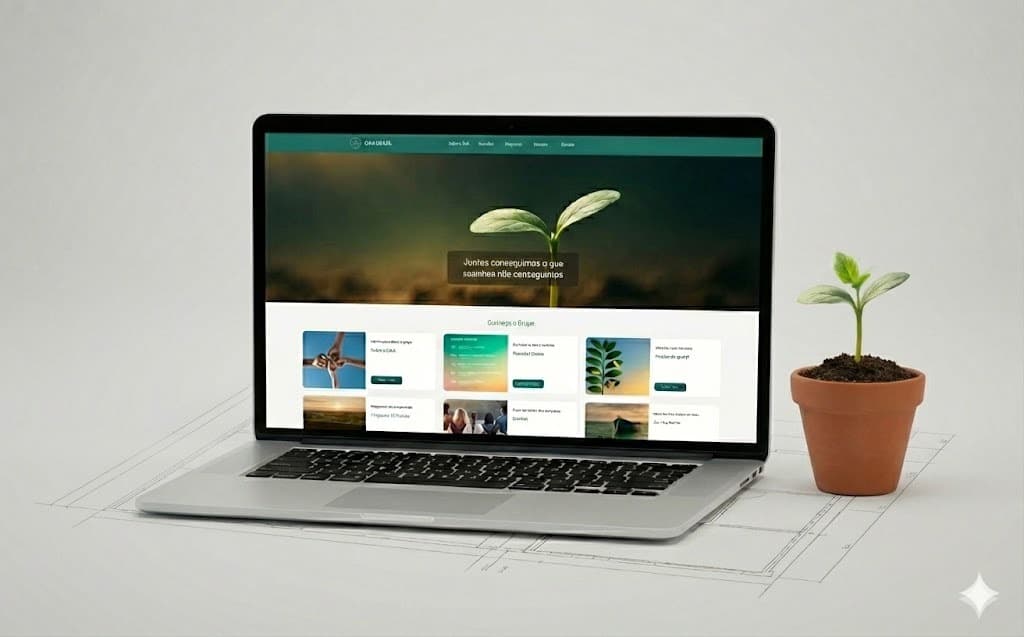
The website serves as an entry point: explaining what CMA is, how it works, and how to participate, facilitating access for new members.
The project was led by me in partnership with a CMA professional from Los Angeles. The website was delivered in 2026.
Accessible without distortion
Translating a structured and institutional system for an audience with low familiarity, maintaining fidelity to CMA guidelines and reducing barriers at first contact.
Institutional complexity
Rigid global guidelines, language, and structure, with little room for free adaptation.
Low audience familiarity
Users without repertoire on the model, requiring clarity and progressive introduction.
Sensitive first contact
Entry points must build trust and welcome, avoiding overload or distancing.
Focus on the newcomer
Reorienting the website for those arriving for the first time, simplifying the experience, reducing complexity, and making the content clearer and more welcoming, without losing alignment with CMA guidelines. As a complement, an application with a sobriety day count function was created, also used as a channel for outreach and access to group meetings.
Project Strategies
Essential content first
Prioritizing what is necessary to understand the group and participate, avoiding excess information.
CMS for group autonomy
Official version built in CMS to allow simple maintenance by non-technical people.
Webcoding as evolution
More sophisticated version developed in parallel, thought of as V2 if the group chooses to expand resources.
App as access channel
App with sobriety count integrated with meeting information and links, also functioning as an outreach tool.
Design Process
Institutional Discovery
Mapping CMA global guidelines — principles, language, and rules — to ensure adherence without distortion.
Reference Analysis
Reviewing websites from other countries to identify existing patterns and what needed to be adjusted for the Brazilian context.
Scope Definition
Conscious decision to reduce pages and content, prioritizing clarity and guidance for first access.
Context-Driven Development
Choosing a sustainable stack (CMS) and structuring the site focusing on simple maintenance and organic discovery (SEO focused on searching for help).
Stakeholder Validation
Iterative reviews with the group in Brazil and alignment with the international commission (CMA/LA) to ensure consistency with guidelines and suitability for the local context.
Application Development
Creation of the app (iOS and Android) with sobriety count and meeting access. Currently in SDK/beta stage, with user validation before store publication.
What this project taught me
Technical evolution in production
Second website developed with VibeCode and first functional app published in a real environment, expanding technical mastery of the complete process.
Stack decisions impact the product
Difference between CMS and webcoding highlighted how technical choices influence maintenance, autonomy, and project evolution.
Collaboration ensures consistency
Working closely with local and international stakeholders was essential for aligning content, language, and cultural context.