B2B Buying Journey Personalization
Mapping the nurturing journey and personalizing the experience to increase conversion within the B2B buyer persona context.
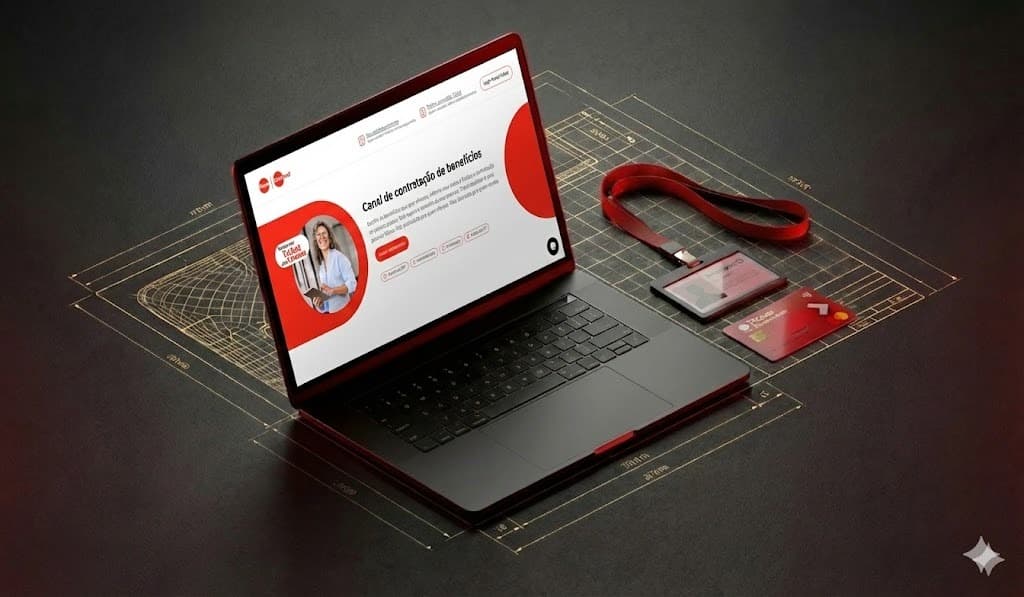
The project starts from the observation that the digital hiring flow represented only an operational snapshot of the actual buying journey. The experience ignored critical evaluation stages, internal validation, and trust-building typical of the HR decision-maker. The goal was to reorganize the journey considering real user behavior and the interaction between marketing, portal, and assisted channels.
During the project period, the Growth area was being consolidated and the B2B portal was treated as the main digital hiring channel. The existing journey reflected a fragmented operational logic. Marketing, sales, and product operated with different readings of the same funnel, making coordinated experience evolution and consistent metric interpretation difficult.
Fragmented journey
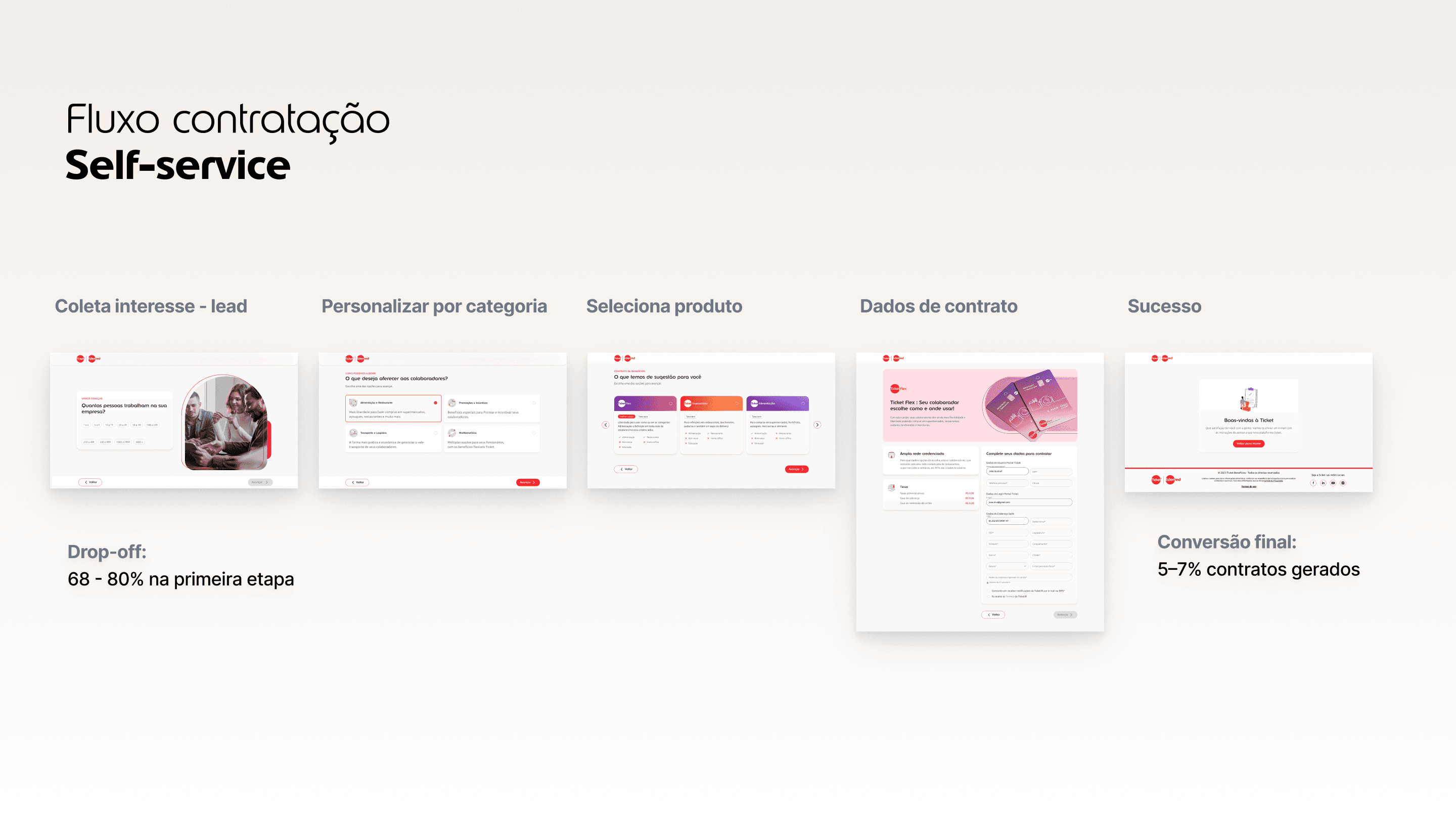
The acquisition experience treated hiring as a linear flow, without reflecting the real behavior of the B2B decision-maker. This created a misalignment between expectation and experience, with high drop-off rates in the early stages. The lack of context and decision support hindered user progression, while mixed traffic increased noise in the journey. A significant part of the decision happened outside the product, without continuity within the digital experience.
Friction point
Entry without context and low understanding of the value proposition
Technical limitation
Rigid flow based on fixed steps, without adaptation by intent
Business goal
Increase conversion in the self-service channel while maintaining operational efficiency
Nurturing and personalization
Personalization of the experience based on the stage of the purchasing process.
The solution originated from the understanding that acquisition is not an isolated moment, but part of a broader decision journey. The focus was to structure the experience to reflect different levels of intention and allow for contextual progression.
Project Guidelines
Journey as a system
Organize the experience considering multiple touchpoints and decisions
Intent as a driver
Adapt paths based on the lead's maturity level
Progressive segmentation
Refine user understanding throughout the journey
Contextual alignment
Ensure coherence between message, timing, and expectation
Design Process
Existing funnel analysis
Drop-off higher than 80% was identified in the early stages.
Interviews with HR decision-makers
Conversations revealed internal validation and prolonged pauses before the decision.
Triangulation with internal areas
Marketing, telesales, and support contributed with a complementary view of the journey.
Mapping the expanded journey
A unified map was created integrating digital and assisted moments.
Landing page redesign
The entry point began to explicit the value proposition and alternative routes.
Incremental validation
Changes were implemented progressively, monitoring existing metrics.
Conversion Impact
Contract Conversion
Increase in conversion of the contract generation flow (from 6% to 24%).
Drop-off Rate
Drop in dropoff rate (from 89% to 86%).
Customer Activation
Increase in final conversion of new customers (from 3% to 7%).
What this project taught me
B2B journeys are non-linear
Complex decision processes require a systemic reading, not just focused on a single channel or operational stage.
Self-service as qualification
The digital flow can function as a qualification and entry point, not necessarily replacing the assisted process.
Real behavior vs. Metrics
Funnel metrics alone can be misleading; they need to be interpreted in light of real behavior and user decision time.