Website Redesign Across 10 Markets
Redesign of Gympass's (now Wellhub) acquisition website architecture and content strategy, implemented simultaneously across 10 markets.
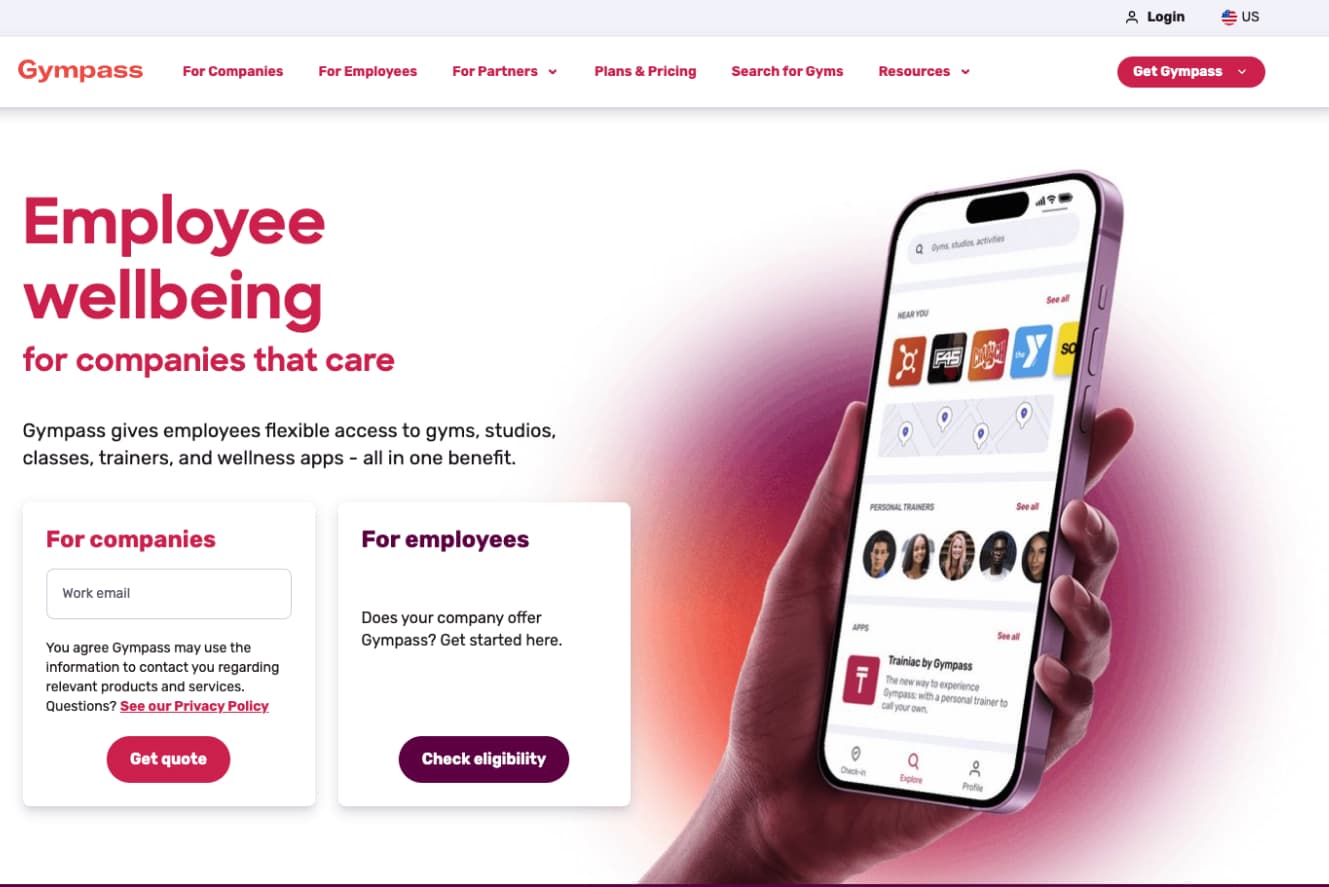
At the time of this project, Gympass was going through a phase of accelerated international expansion. The company's digital presence was the result of local decisions: each country maintained its own site, created on different CMSs and managed independently. This generated brand inconsistency, different experiences for the same product, and difficulty in treating the website as a strategic acquisition channel.
At the same time, the company was starting to structure the Growth area and looking at the institutional website as a central point of the journey, especially for B2B acquisition. It became clear that it would not be possible to scale acquisition without first solving a structural problem: the absence of a common architecture for content, navigation, and governance between markets. This project arises as a response to this scenario, with the objective of reorganizing the acquisition website as a shared base, balancing global standardization and local personalization in a B2B2C context.
The Structural Problem
Scaling acquisition was challenging due to fragmented systems, inconsistent branding, and a lack of centralized architecture across 10 global markets.
Inconsistent Branding
Each country maintained its own website, leading to varying visual identities and brand experiences.
Fragmented Operations
Managing multiple CMS platforms and separate codebases resulted in a slow and difficult maintenance process.
Lack of Core Architecture
There was no shared foundation for navigation, hindering the application of scalable growth strategies globally.
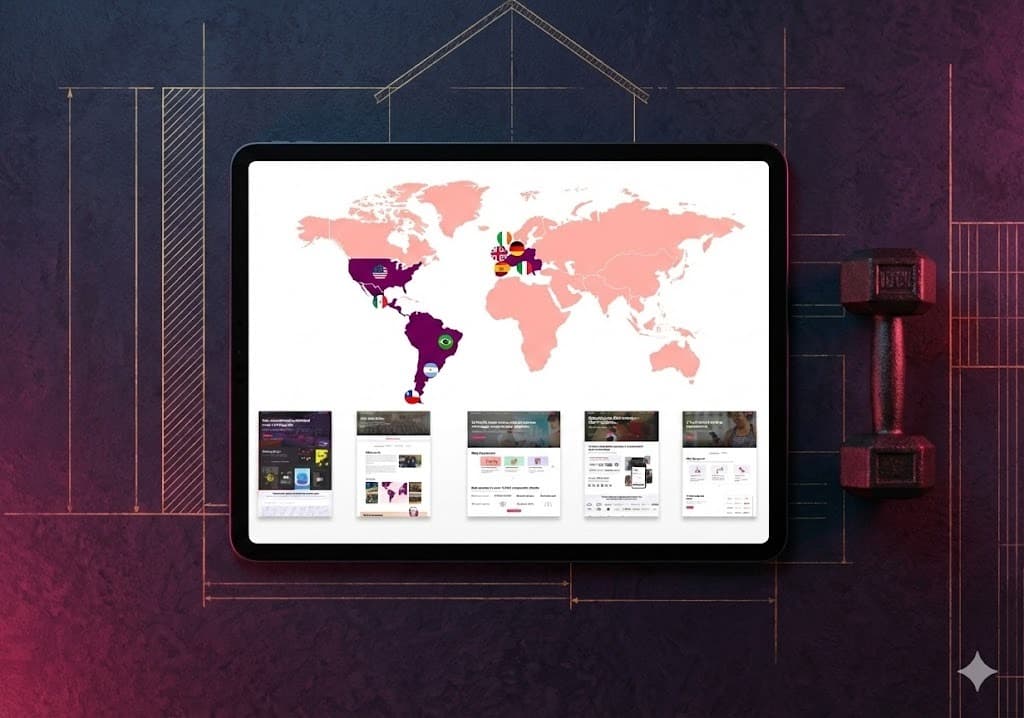
5 pages x 10 markets
To unify the global experience in 10 countries, we restructured the B2B, Users, Partners, Employee journeys and the institutional page. The strategy established a scalable foundation for accelerated growth and brand consistency in all markets.
Involved Strategies
Centralized Growth Architecture
Single and scalable foundation for 10 global markets, optimized for data integrity and simplified maintenance.
Standardization of Experience and Branding
Unification of the design system and brand language, ensuring visual consistency across all international fronts.
Multi-channel Customization (B2B, B2C & Partners)
Dynamic content ecosystem that adapts the experience for different user journeys in the same environment.
Strategic Localization and i18n
Deep adaptation that respects the cultural and linguistic nuances of each country.
Design Process
Discovery in global context
Survey of the existing scenario by country, benchmark analysis and understanding of differences between markets to identify limits, risks and opportunities before proposing any standardization.
Internal mapping and alignment
Reading existing pages, mapping requirements and continuous alignment with global and regional teams (product, marketing, branding, growth and content).
Experience architecture
Definition of content architecture, organization of journeys by audience (B2B, B2C and partners) and establishment of standardized and customizable layers by country.
Wireframes and prototypes
Creation of wireframes and navigable prototypes based on the company's design system, ensuring structural consistency and flexibility for local adaptation.
User validation
Qualitative interviews and usability tests conducted in different markets to validate clarity, understanding and coherence of the journey.
Handoff and follow-up
Structured delivery for engineering, alignment with involved teams and follow-up on implementation to ensure fidelity to the design proposal.
Results
Growth
Increase in traffic specifically directed to B2B Lead capture.
Retention
Improvement in average engagement time on the reformulated pages.
Users
The active user base jumped to 2 million during the rollout period.
Markets
Simultaneous rollout in 6 global markets with direct improvement in final conversion.
What this project taught me
Stakeholder management changed the way I work
This was the main learning of the project. For the first time, I needed to clearly understand who to involve, when to involve each person and what level of detail was necessary in each conversation.
Growth starts with organization, not optimization
Organizing architecture, content, events, taxonomy and metrics showed me that without a common base there is no collective learning or consistent evolution.
A project that marked many “first times”
It was my first global-scale project, my first international experience, my first work in English and my first direct contact with growth.